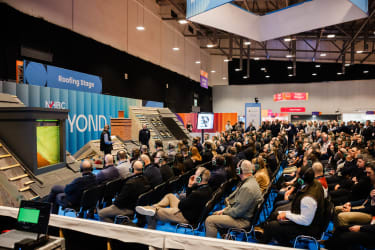
With four stages and a bustling exhibition hall packed with contractors, suppliers and trade specialists, BEYOND ’26 LIVE had something for everyone.
At its centrepiece was a series of keynote talks by speakers from across the industry, all focused on one primary objective: shaping the future of construction.
And while perspectives differed and visions of tomorrow varied, it was clear that several common themes dominated the minds of all in attendance.
So what were the central points made by each keynote speaker – and what can their combined messages tell us about where things are headed?

An economic overview
Proceedings began with a presentation from Lord Barwell, a former housing secretary and current chair of both the NHBC Foundation and its expert panel.
Armed with statistics, he explained that the Government is not on course to meet its home building target – a statement that was not especially surprising to most in the audience, but nevertheless addressed an elephant in the room.
Lord Barwell pointed to poor demand as the most significant culprit for being off target, noting an eye-opening demographic shift as a likely factor.
A study by market research firm GfK found that since the start of the current parliament, consumer confidence among 16 to 29 and 30 to 49-year-olds has risen steadily while simultaneously falling among those aged 50 to 64 or 65+.
As Lord Barwell explained, the economic hesitancy of older generations who disproportionately own, buy or sell property was arguably more damaging to the new homes industry than the increasing confidence of younger people less likely to have saved a deposit.
More positively, our first keynote speaker highlighted that the apparent falling of inflation towards the Bank of England’s 2% target was an encouraging sign for the UK economy, suggesting that the likely short-term lowering of mortgage rates on the market would hopefully encourage more demand among new home buyers.
Thinking bigger
We then heard from the construction coalface with a speech from Jennie Daly CBE, the CEO of Taylor Wimpey.
Jennie echoed the demand challenges facing companies like hers, while also celebrating the positive progress achieved by recent planning changes.
It was clear that she remained cautiously optimistic for the years ahead, noting that any future help-to-buy incentives or stamp duty reforms would support consumer confidence.
In June, Daly will take over as the chair of the independent Future Homes Hub – a role that aims to foster collaboration across the industry in order to deliver high-quality, zero-carbon homes at scale.
Whether in that position or through leading one of the UK’s biggest house builders, it’s evident that she will continue to be a vocal champion for increasing delivery at pace.
Supporting stability
Of course, it’s not just the private sector that’s striving to provide more accessible housing.
Ian Workman, Chief National Officer at Homes England, used his keynote address to remind the crowd just why everyone’s work across the industry is so vital.
Showcasing a video case study featuring a service veteran who has benefited from a local authority-supported new homes programme, Workman argued passionately that every home built can provide a legacy of opportunity for individuals, families and children alike.
Stability was Ian’s recurring theme as he talked about how a child who grows up with a permanent, long-term roof over their head is given an environment that enables them to learn and can shape their professional career and personal life for decades.
Skills today for homes tomorrow
That message of development and growth was reinforced by the final keynote of the morning as Mark Farmer, founder of Cast Consultancy, took to the main stage.
He called for the builders, developers and subcontractors in the room to capitalise on the skills opportunities presented by a less-intensive new homes market.
By investing now in training courses, apprenticeships, innovative skills and new technologies, Farmer argued, firms could ensure they are better prepared when demand recovers and they find themselves busier.
He pointed to a boom-bust cycle that can occur when cautious companies fail to invest in training during downturns, leading to long-term workforce gaps exacerbated by the ageing demographic in construction

Moving beyond the barriers
Four different speakers. Four different talks.
Nevertheless, there were four clear patterns that ran across the main stage throughout the morning, leaving delegates with one consistent picture.
First, there was no hiding from the challenges and struggles involved in meeting the Government’s ambitious 1.5 million new homes objective by 2029.
Every speaker highlighted that challenging economic circumstances and global instability were currently holding the industry back from reaching its full potential – requiring intensive efforts to get back on track.
But optimism prevailed, with each keynote looking forward to more encouraging conditions involving increased demand and accelerating supply.
The importance of finding, recruiting, training and retaining workers was also repeated time and again, with construction leaders clear that investing wisely in skills development was a prerequisite to building quality new homes at scale.
And finally, passion.
All our speakers were visibly united by a desire to solve problems proactively and work together to shake off stagnation.
With more than three years until the deadline for the industry’s key target, there’s obvious appetite for rolling up the sleeves.
Latest articles

NHBC CEO urges industry to invest in quality ahead of growth
‘Future ready. Quality first.’: NHBC reveals theme for BEYOND ’27 LIVE

BEYOND ‘26 LIVE Northern Ireland