Nothing is more important than getting every single person involved in house building home safely at the end of the day.
But despite significant recent improvements, construction remains one of the UK’s most high-risk working environments.
Reducing that risk as much as possible requires robust health and safety management processes and systems that not only protect workers, but also maintain build quality, regulatory compliance and project delivery.
Leading organisations like NHBC are playing a key role in embedding safety standards across the sector, but ultimately, every individual business must take responsibility for protecting their employees, contractors and the public.

An improving picture
It’s impossible to remove every single possible source of danger from construction sites.
After all, building homes depends on heavy machinery, work in challenging conditions and physical labour.
Yet even as the numbers of deaths fall, every fatality affects real people, families and colleagues – something that goes far beyond the statistical.
Injuries also change lives, with figures from the Health and Safety Executive revealing that as many as one in 40 construction workers susined a non-fatal workplace injury in the three years up to March 2025 – a rate higher than any that for workers across all industries.
The human cost can be tragic, but it’s far from the only impact.
A strong business case
Achieving good health and safety at work doesn’t come for free.
Providing a poor health and safety environment, however, is drastically more expensive.
The total annual cost of injuries and ill health from working conditions across the whole of the UK is a staggering £22.9bn.
Broken down, every single workplace fatality costs a business £1.7 million on average, while each non-fatal construction on injury comes in at £8,800.
There are not just the medical bills, sick pay and compensation to consider, but also the potential for fines, legal fees, insurance costs, lost output or production and management time spent handling incidents.
Add other difficult-to-quantify effects, such as a damaged reputation or reduced staff morale, into the mix and it’s obvious that a proactive, preventative approach to health and safety is a wise investment for any sensible business.
Taking ownership
At NHBC, we like to practise what we preach.
That’s why we see health and safety as a key part of our organisational culture rather than merely an exercise in compliance.
Such an attitude has to come from the top; our leaders’ and board members’ commitment to making work as safe and healthy as possible trickles down through our entire company.
The result is a business that follows best practice, setting our clear responsibilities across our teams, conducting rigorous risk assessments and hazard identification, collaborating with external site teams and contractors, providing regular staff training and continuously monitoring our safety performance.
But even if you too are doing all the right things to look after your workers, you could still be doing it inefficiently.
Modern tools for modern construction
With construction always changing at pace, it can be easy to fall behind your competitors before you even realise it.
For some firms, that can happen in the way they manage their health and safety processes – not least because if incidents are rare and things seem to be working well, upgrading or reviewing systems might not have been a top priority.
Builders, developers and subcontractors still using paper documents or decades-old tools could be missing a trick.
By embracing digitisation, you can make it far less time consuming and labour intensive to stay on top of everything.
The right platform can centralise your paperwork in one convenient location, make it easier to manage risk assessments or inspections, monitor your group-wide compliance and produce audit-ready records while giving you better visibility across multiple sites.

The AssessNET solution
Of course, we’ve seen plenty of digital systems that claim to be the answer come and go.
What can construction businesses really trust their vital health and safety processes with?
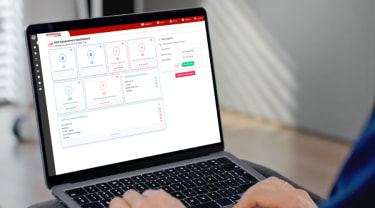
One popular cloud-based option is AssessNET from Riskex.
It’s software that solves a wide variety of problems, with a risk assessment module that simplifies their creation, distribution and review to accident and incident management capabilities that can help you identify areas of concern.
And because Riskex has been going for more than 25 years, AssessNET is designed based on extensive experience of what construction companies really need to go beyond health and safety compliance.
That’s why we’ve teamed up with Riskex to make it even easier for your construction business to take advantage of AssessNET.
Thanks to our partnership, you can enjoy special introductory pricing on AssessNET for a limited time only.
What’s more, clicking through from our link will give you exclusive free access to the AssessNET Logbook module, too.
There’s never a bad time to invest in your health and safety – but today is always the best time possible.
Philip Hallgate, Head of Health and Safety at NHBC, states, "The system has significantly enhanced our ability to monitor performance, identify trends, and implement proactive improvements, ensuring our health and safety management processes remain effective and transparent.
The platform has provided us with the confidence that our compliance arrangements are robust, our reporting is meaningful, and our commitment to protecting our people is supported by industry-leading technology. AssessNET continues to be a valued partner in our journey of continuous improvement and operational excellence."