
With demand for new housing increasing all the time, more and more developers are turning to previously used land for their residential projects.
It's an approach that breathes new life into long-neglected areas, provides much-needed homes and fosters communities that generate revenue.
But beneath the surface, ground gases can present key challenges that, if not properly understood, can lead to costly redesigns, delays and compliance issues.
So what do you need to know to mitigate the risks of unexpected delays?
What are ground gases?
While working out what’s underneath your land requires insight and expertise, the definition of ground gases is, at least, simple and straightforward.
Gases such as methane, carbon dioxide or hydrogen sulphide may be generated within the ground either as a result of natural processes or through the polluting effects of human activity.
For example, ground gas can be formed by the decomposition of organic matter, by sediments like peat or by historic waste disposal or mining work.
Why do they matter?
The presence of ground gases alone may not be a concern; their impact depends on ground characteristics influencing gas movement, the gas-generating potential of the source, and plot-specific factors that affect both vulnerability and the potential for gases to enter buildings.
If not thoroughly investigated and addressed, unsafe conditions may remain undetected or unmanaged, increasing the risk of ground gas entering buildings through cracks in floor slabs, service penetrations or unsealed cavity spaces.
This might introduce the risks of explosion, fire hazards, air quality problems or even, in extreme cases, asphyxiation.
Where do you find ground gases?
Ground gases can occur on any piece of land but are more commonly associated with brownfield sites.
It’s perhaps no surprise, given lots of brownfield land has been home to landfill, industrial, gas works or chemical works sites in the past.
Elsewhere, even green belt locations can have ground gases present due to the existence of peat-rich or organic soils or just proximity to areas of historical waste tipping.
The history of your land’s use is critically important when it comes to gas – so understanding that background is essential.
Why is ground gas so important for housing?
Residential developments are particularly sensitive to the risks posed by ground gases for several reasons.
Unlike industrial or commercial units, residential dwellings have limited or no building management controls over alterations to internal structures, room usage and ventilation, lifestyle choices or the building's structural fabric.
Gas protection measures are therefore at greater risk of being compromised or underperforming in residential settings, so careful assessment and considered design are essential to ensure occupant safety.
And because they're typically much smaller than industrial or commercial buildings, their reduced internal air volumes are more susceptible to the ingress of ground gas, meaning additional consideration should be given to vulnerable occupants like children, older adults or those who may be particularly sensitive to lower air quality.
Ground slab construction in residential dwellings is generally also more conventional, rather than civil-engineered, which can further increase susceptibility to ground gas ingress if not properly understood or addressed during design and construction.
What should I do?
Without doubt, the most important and advantageous thing for any developer to do about ground gas is to identify it as early as possible.
That means undertaking desk research that collects information about your site and its surroundings. Where potential risks are identified, a preliminary risk assessment for possible contaminant sources should be conducted.
This process requires the rigorous and comprehensive collection of data to determine whether gas protection measures are required and how they should be designed.
Only once this data has been interpreted will you know how to design appropriate mitigation measures – such as gas membranes, ventilation systems or other passive or active protection systems – that mitigate risks to ensure safe development.
You’ll also be better equipped to choose the right construction partners for your project; ones that are trained or specialise in the relevant specific gas protection measures.
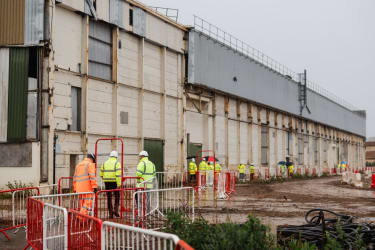
If the thought of finding and understanding the invisible gases under your land feels daunting, help is at hand.
NHBC’s experienced Land Quality Service can support you every step of the way, de-risking and unlocking your sites with independent opinions from trusted experts.
This in-house team of geotechnical and geo-environmental engineers is ready to examine greenfield, brownfield and grey belt land to help you understand if it will be able to meet the quality requirements of the NHBC Standards.
Managing ground gas risk is critical for residential development. But with the backing of our specialists, you’ll be well informed from the earliest possible stage.
Latest articles

The risks housing associations face – and how to tackle them

Our commitment to supporting subcontractors

Decades of change: The evolution of our Building Control service
