Earning a vocational qualification is an effective route to proving your ability and advancing your career prospects.
It’s also popular, with 5.3 million certificates awarded in vocational and non-academic qualifications between October 2024 and September 2025.
NVQs are among the most well recognised and in demand – but despite their familiarity, people often misunderstand what they are and how they work.

Not what you might think
Let’s begin with the basics.
An NVQ, or National Vocational Qualification, is a work-based qualification in one of many practical subjects, including engineering, manufacturing, hospitality, healthcare, sport and, of course, building and construction.
Sounds simple enough.
Yet many assume that an NVQ offers a route into an industry, much like a BTEC or an apprenticeship, and serves to teach skills and knowledge to new starters.
In fact, you might not realise that NVQs are only available to those who are already working, because instead of training or educating, their purpose is to assess existing competence.
Proving your quality
So how do construction NVQs really work – and if they don’t provide new skills, is there any point in completing one?
If you’re looking to learn before you get started in the house-building industry, the short answer is no; you’d need to explore other options to begin your new career, such as an apprenticeship in your chosen field.
But if you currently work on sites, an NVQ can be a brilliant choice to get your talent and experience recognised formally.
The process is straightforward.
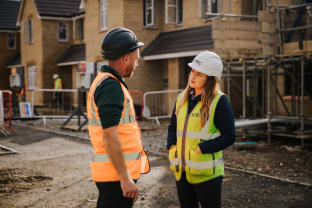
You’re assessed on site during your normal day-to-day work, with your performance in the job being measured based on evidence from things like observations, reviews of site work and documents or professional discussions between you and your assessor.
There’s no classroom-based training – another misconception – and crucially no need to leave your job, take any formal exams or revise any theoretical learning.
Instead, you’ll show your quality over time, building a portfolio from all the on-site evidence while you continue to work and earn.
Then, once you’ve completed each mandatory and optional units and collected enough evidence for all of them, a final assessment will judge your level against national occupational standards.
There are nine in total, from an Entry Level covering basic introductory tasks right up to the Level 8 doctorate, award, certificate or diploma, meaning you can gain qualifications broadly equivalent to GCSEs, A Levels, undergraduate and postgraduate degrees and even PhDs.

Career credibility
You might already know your worth, but does your employer?
What if you want to apply for a new internal role or take on more responsibilities; how would you show that you are worthy?
Gaining an NVQ gives you the weighty backing of a recognised, respected qualification.
That improves your employability and career progression opportunities, while also supporting future CSCS card applications and site access requirements.
Some construction workers choose to progress from their initial NVQ to a higher-level qualification, especially if they wish to take the next step in their profession, perhaps to a supervisory role on site.
Good for everyone
The benefits aren’t only for the worker, either.
When employees gain NVQs, it helps businesses prove their workforce competence and compliance, allowing them to assure customers of quality.
You’ll also be strengthening your development culture, encouraging others to follow in their colleagues’ footsteps and keeping your staff growing alongside your organisation.
At NHBC, we know that NVQs play a key role in raising overall standards across the construction industry.
It’s why we’re an NVQ Centre with Direct Claim Status, providing assessment and training support from our own dedicated assessors.
They work with site teams to make the whole experience smooth, assisting with gathering and structuring evidence while aligning with industry standards and competency expectations.
So whether you’re an experienced construction worker or you employ them, we can help you gain recognition for the real-world skills you use day in, day out.

Latest articles
The skills needed for the future of house building

Mind the gap – why the housing sector must tackle the construction skills crisis

The future’s built on skills: Why training investment matters in construction
